
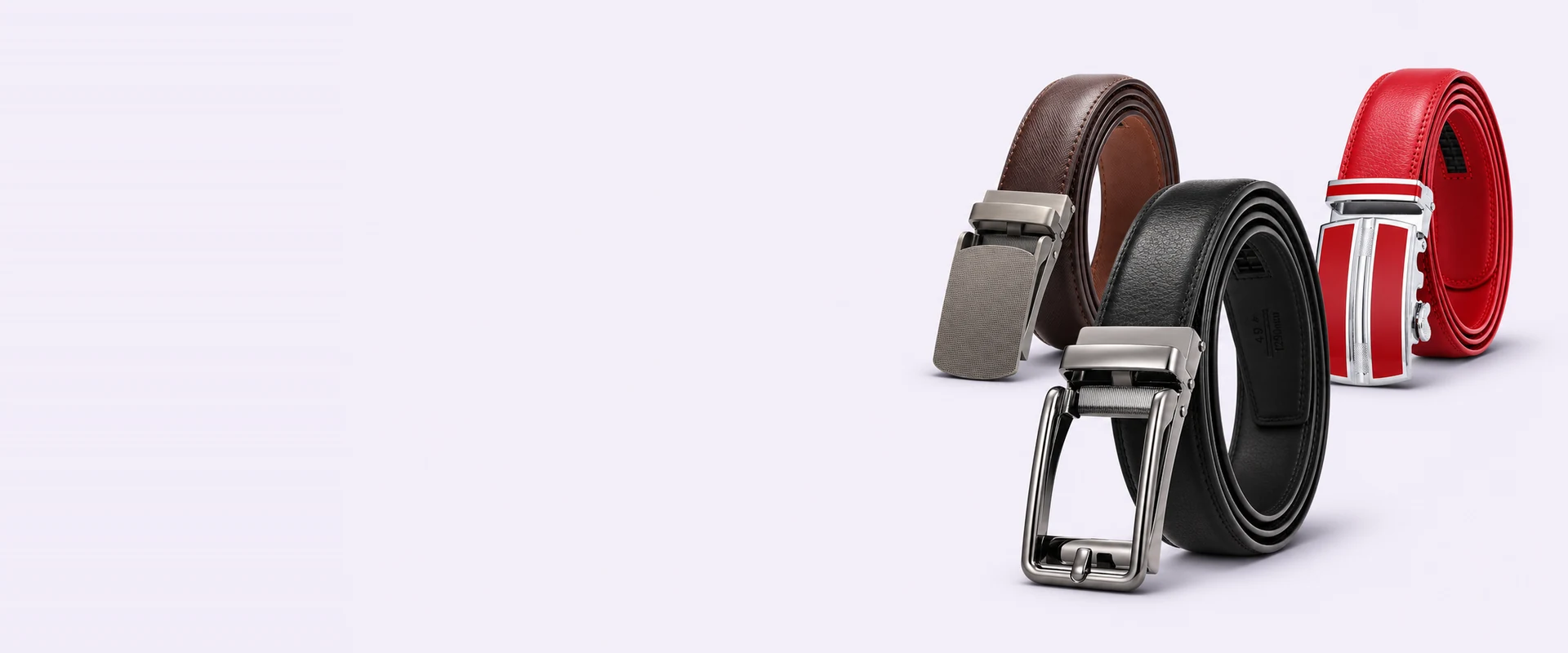
Custom Ratchet Belts
WiseBelts makes custom ratchet belts in Yiwu, China, pairing the strap and buckle around a track that adjusts in small steps.
Design Around the Ratchet System
- The minimum order is 100 belts.
- Strap width and thickness must suit the chosen buckle opening.
- The buckle face gives a private-label mark a visible position.
- A leather or synthetic strap needs the right backing to carry the adjustment track.
- We inspect every finished belt before it leaves our Yiwu factory.
Develop a Belt Around Its Buckle
With a ratchet belt, the hardware and the strap have to work as a pair.
Start at the track
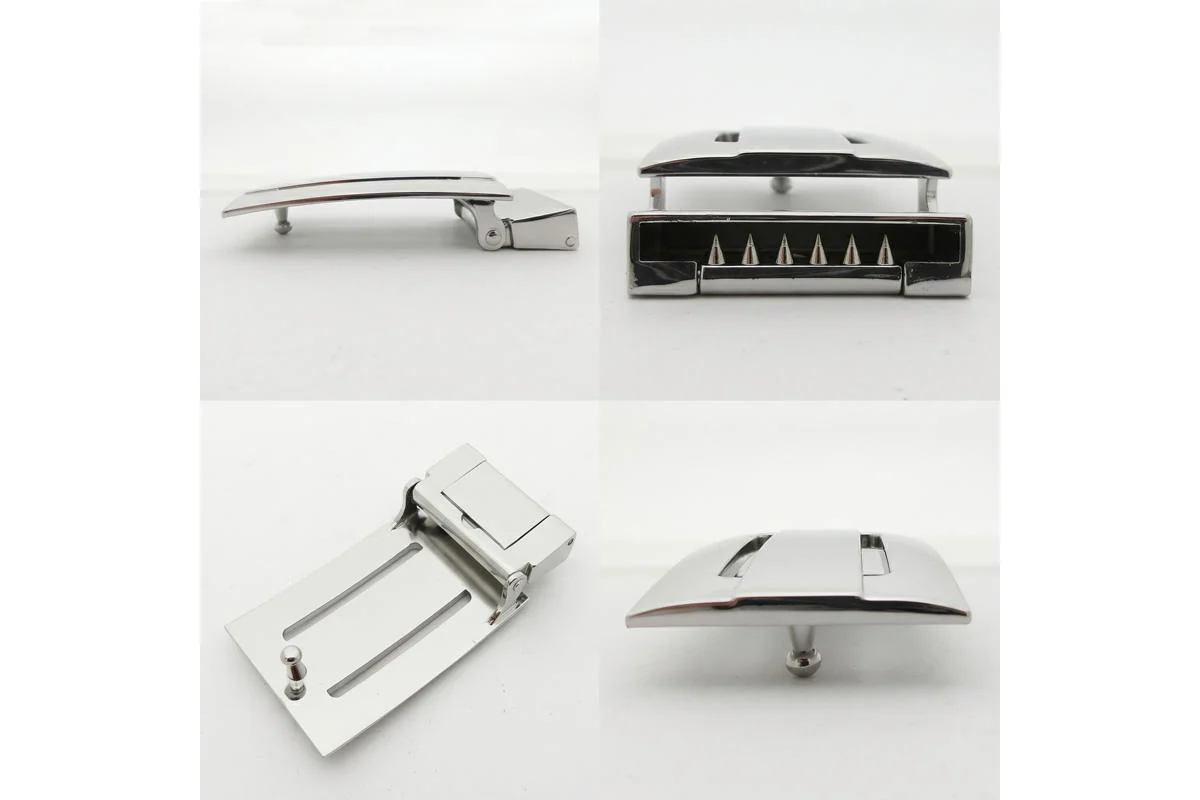
A photo of the underside shows the adjustment system behind the design.

Match the buckle
We discuss the buckle opening alongside the thickness of the finished strap.
Position the track
The buckle needs to engage the track at both ends of the intended waist-size range.
Keep the release accessible
The sample lets the wearer try the release while the belt is on.

Place the branding
A buckle face can carry a visible mark without cutting into the track.
Inspect a sample
Fasten and release the sample at several points along the track to check the fit.
Pick a Ratchet Belt Profile
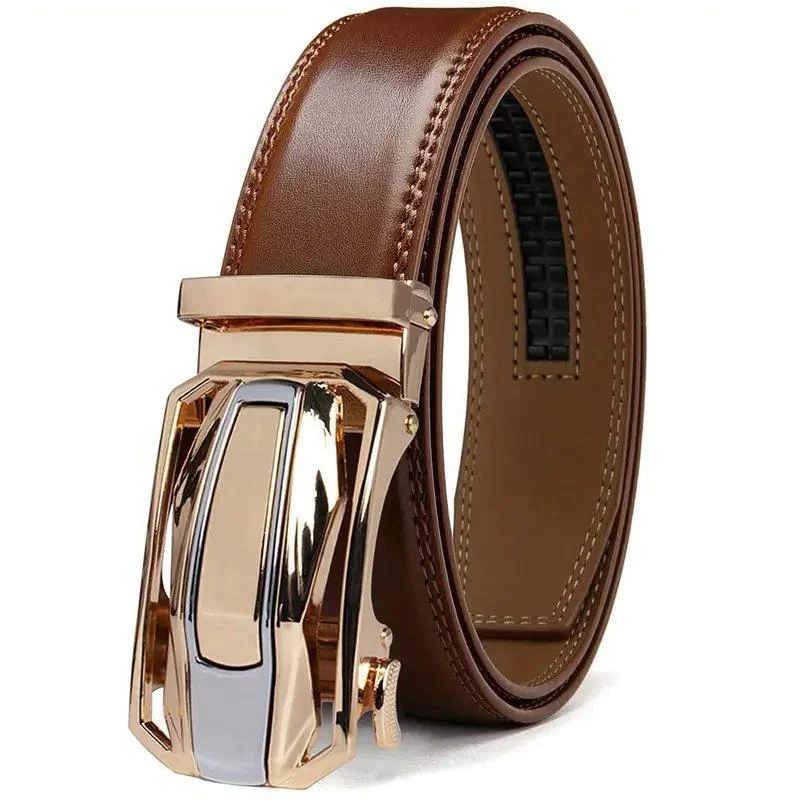
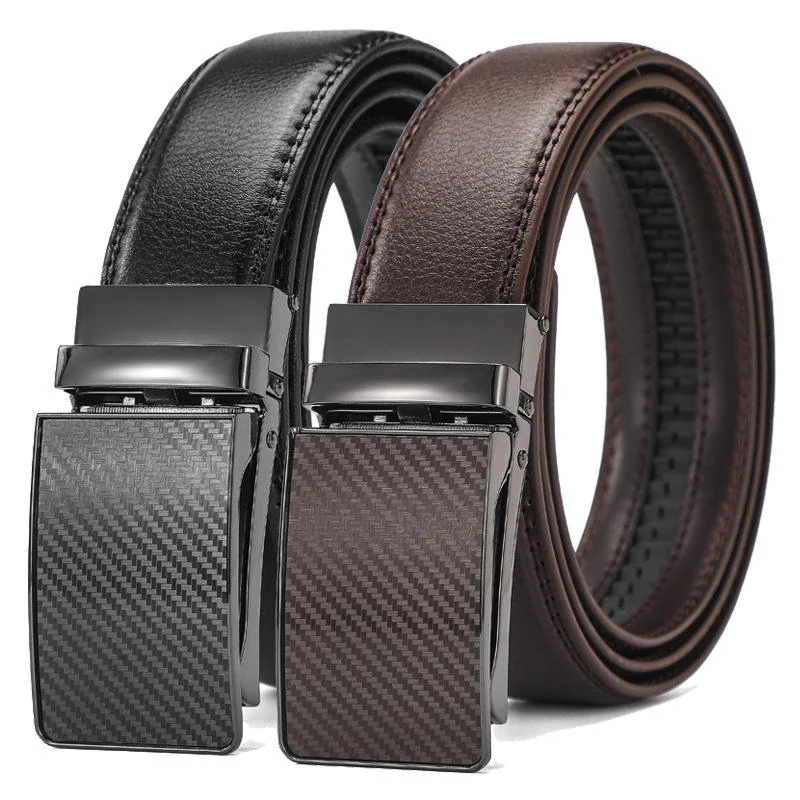
A photo of the buckle front and the track on the reverse is a good starting point for your design.
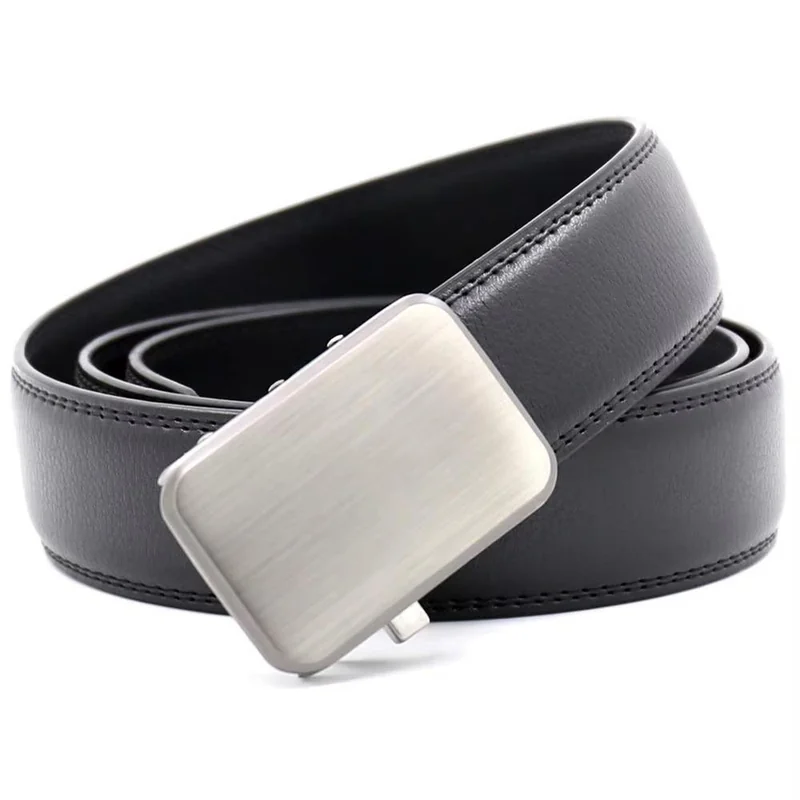
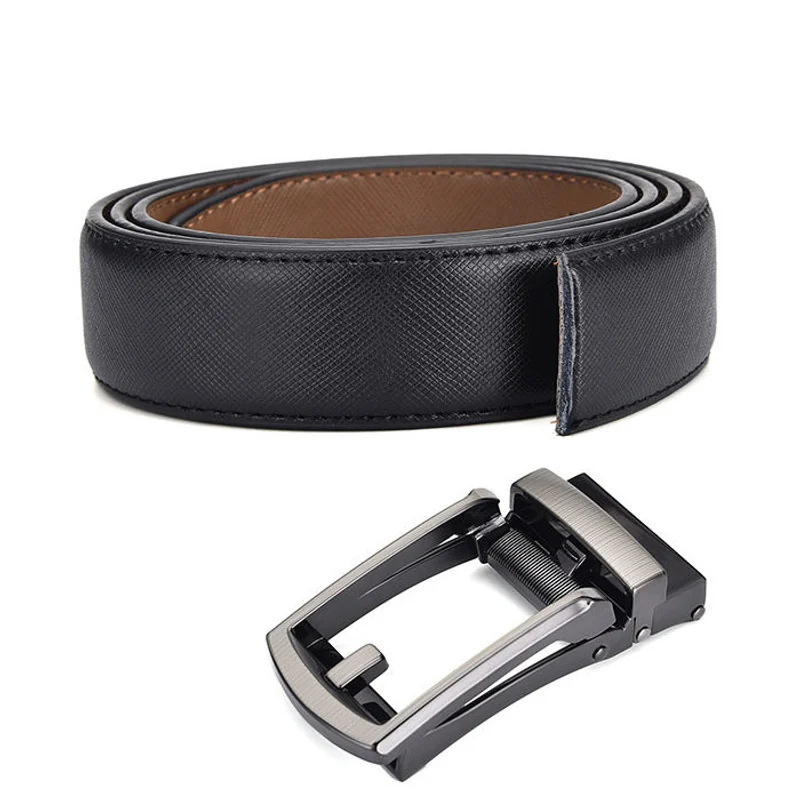
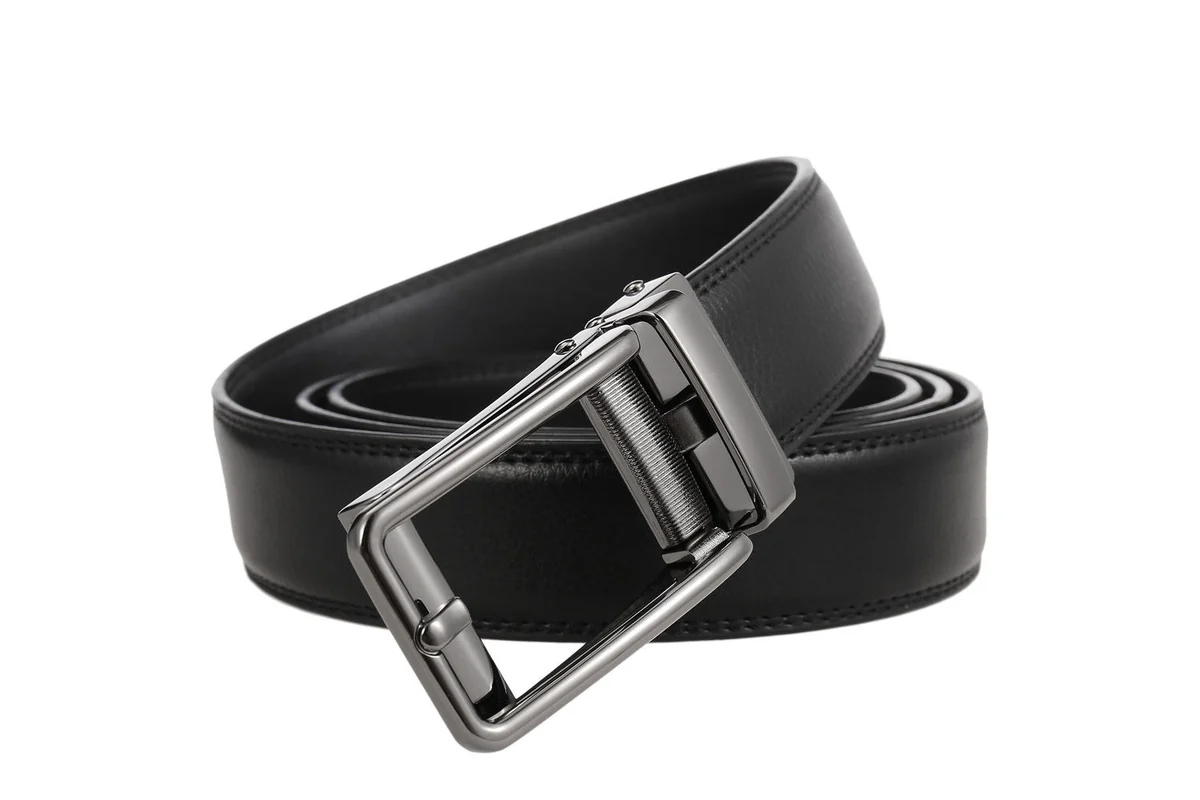
Match the Strap to the Buckle
Clearance inside the buckle depends on the finished strap, including its backing and edge.
- Inside width
Measure the usable opening between the buckle sides. - Finished thickness
Include the backing, track and any edge build-up when checking clearance. - Tail shape
A rounded or tapered tip can guide the strap into the opening. - Buckle end
The attachment has to suit the way the strap is held at the fixed end.
Position the Adjustment Track
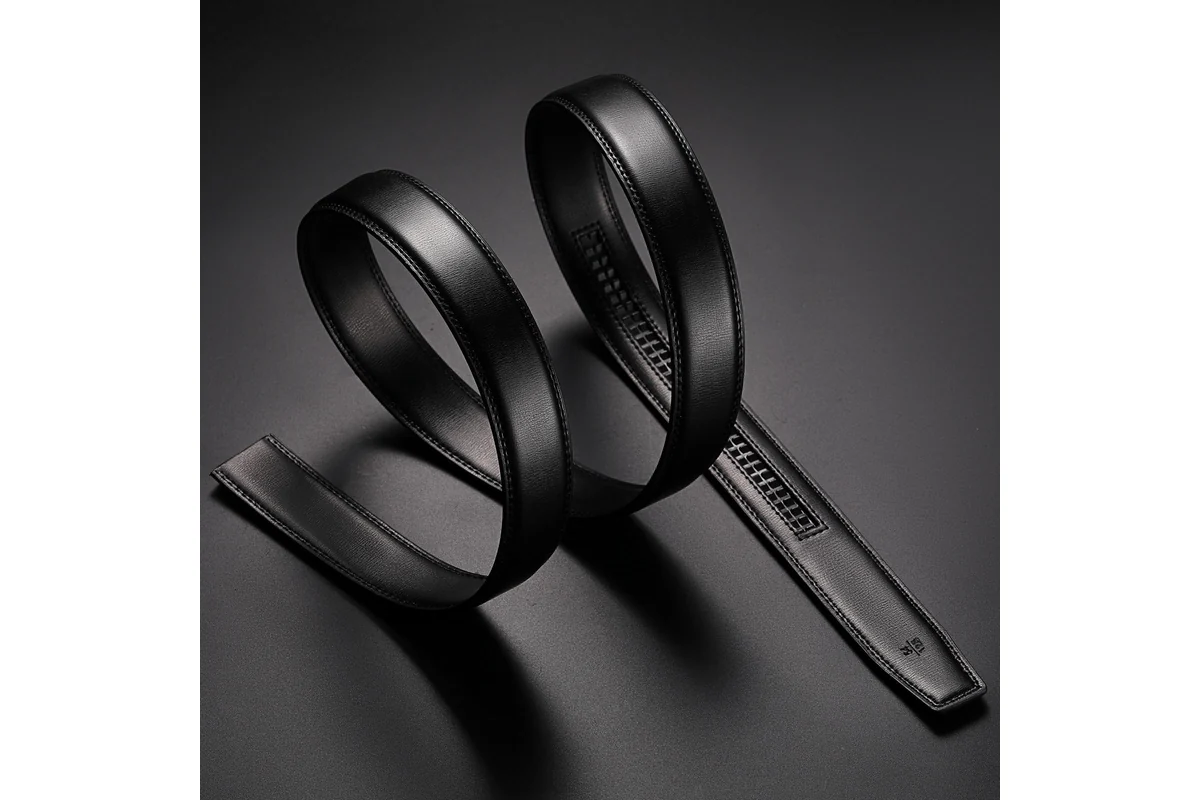
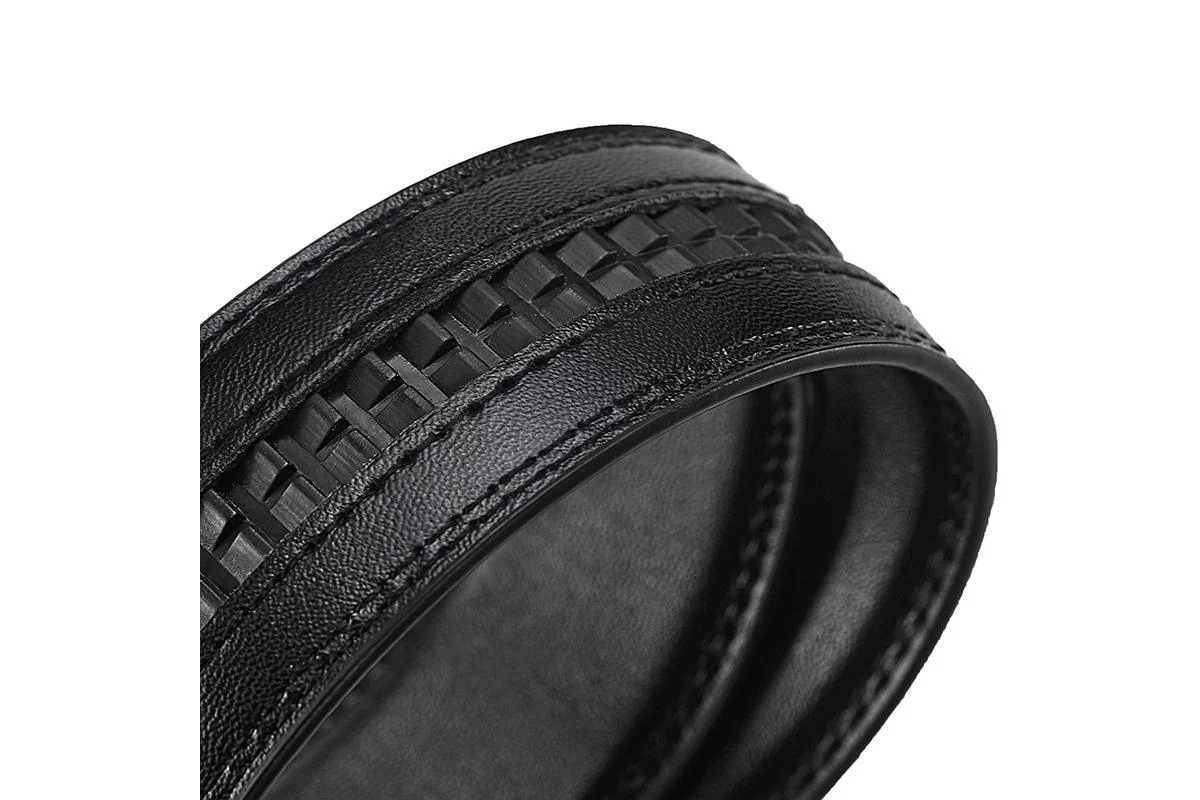
The track determines which part of the strap can engage the buckle.
- Starting position
Check where the buckle engages on the sample at the smallest and largest waist sizes you plan to offer. - Usable track length
At the same tooth pitch, a longer usable track gives the buckle more fastening positions. The teeth must span both ends of the intended fit range. - Spacing
Tooth pitch affects the size of each increment and must match the buckle mechanism. - End clearance
Leave enough strap beyond the engaged teeth for the tail to sit neatly.
Choose the Buckle Face and Release
The front profile sets the look. The release position affects everyday handling.
- Low profile
A flatter face makes the buckle less prominent beneath a shirt. - Broader face
A wider front gives a logo more room and becomes a focal point. - Release access
Check that a wearer can reach the release when the belt is fastened. - Finish
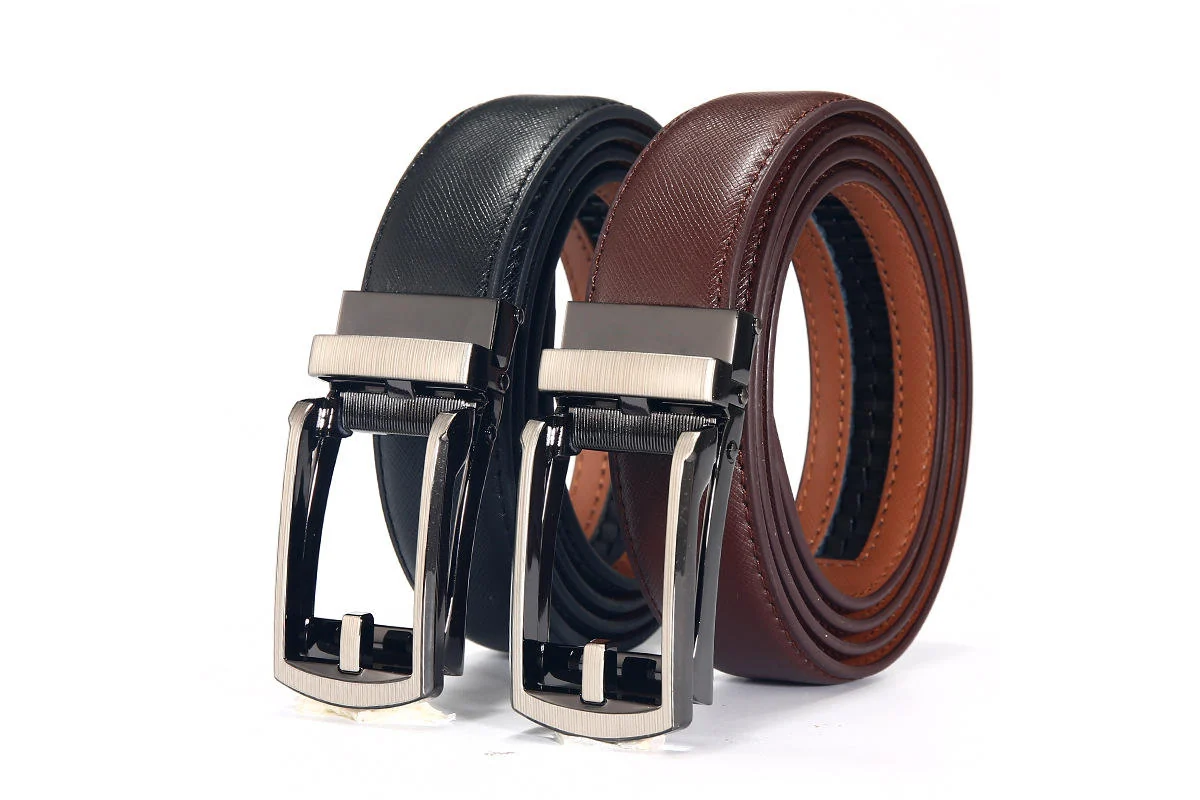
A brushed face shows a fine directional grain. Polished metal reflects more light, while gunmetal gives the buckle a dark gray tone.
Set the Length Range
Plan the wearing range separately from the overall length of an uncut strap.
- Wearing point
Fasten the sample at the middle waist size and mark where the buckle engages the track. - Fixed-size version
A finished strap length puts the track in a predictable position. - Trim-to-fit version
On a trim-to-fit style with a removable buckle, the plain attachment end can be shortened and refitted. The toothed end stays intact. - Trim instructions
On a trim-to-fit style, a diagram can show which end to cut so the toothed track stays intact.
Add Branding Away From the Track
A mark needs a surface that stays visible and does not affect engagement.
- Buckle emblem
The front face keeps the brand visible when the shirt is tucked in. - Strap tip
A small mark near the tip leaves the track side clear. - Subtle finish
A tone-on-tone mark lets the hardware silhouette remain the main detail. - Size information
A tag or sleeve gives room for fitting instructions and the length range.
Strap Faces and Track Backings
The outer finish and the underside perform different jobs.
Strap face
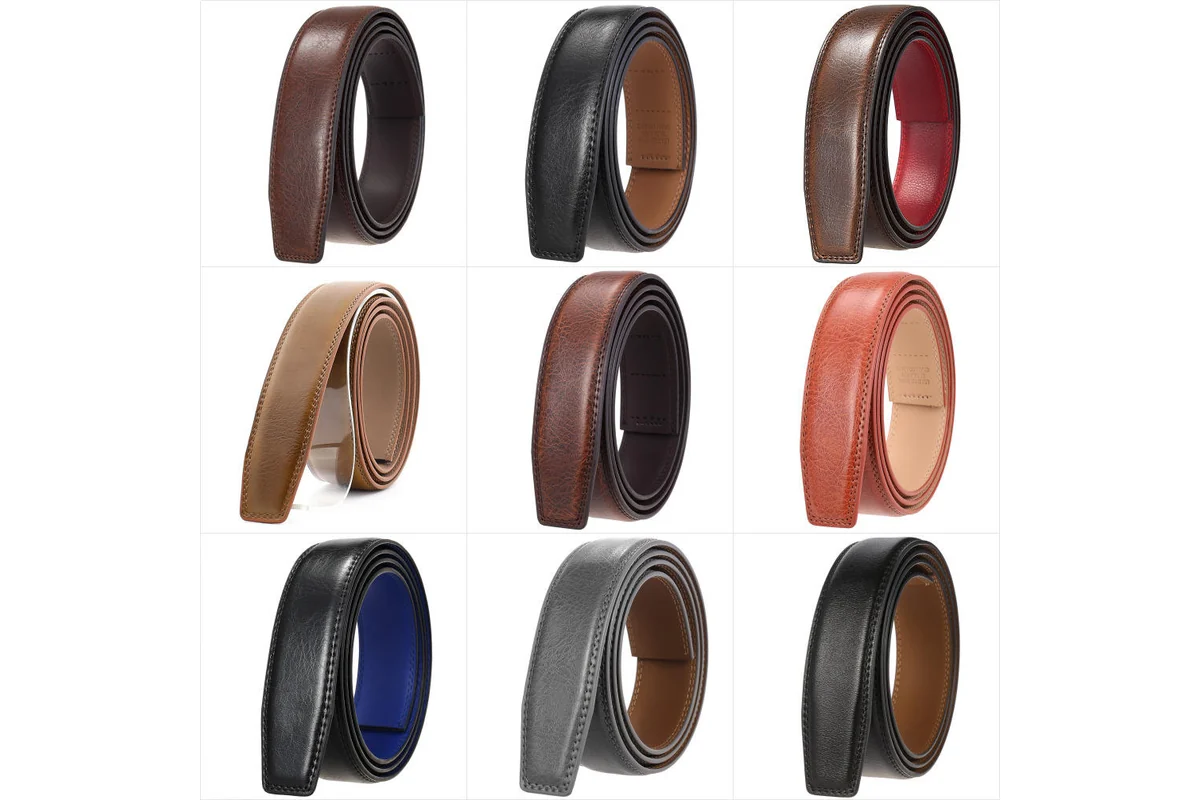
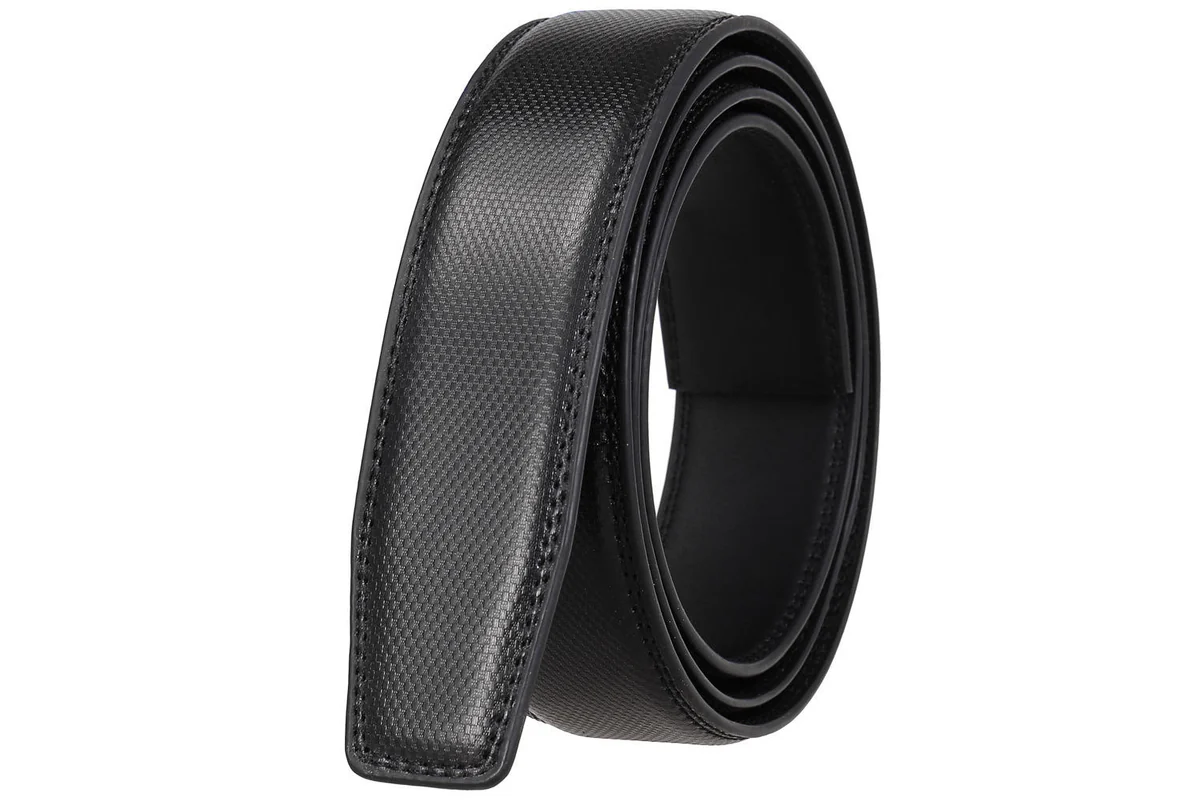
A leather face shows its grain. A synthetic face can carry a selected repeat texture.
Discuss the Strap Face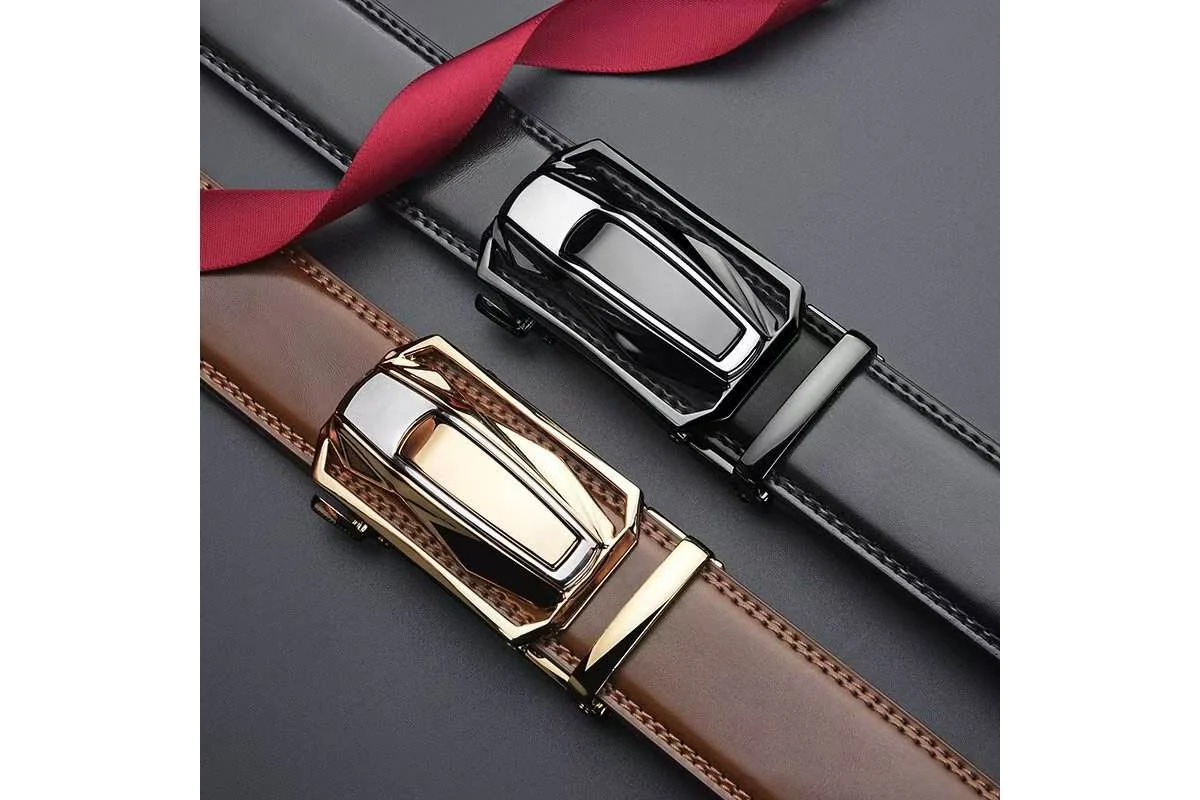
Buckle compatibility
Straps of the same width can differ in thickness and track profile. Compare the complete sample with the intended buckle.
Discuss Compatibility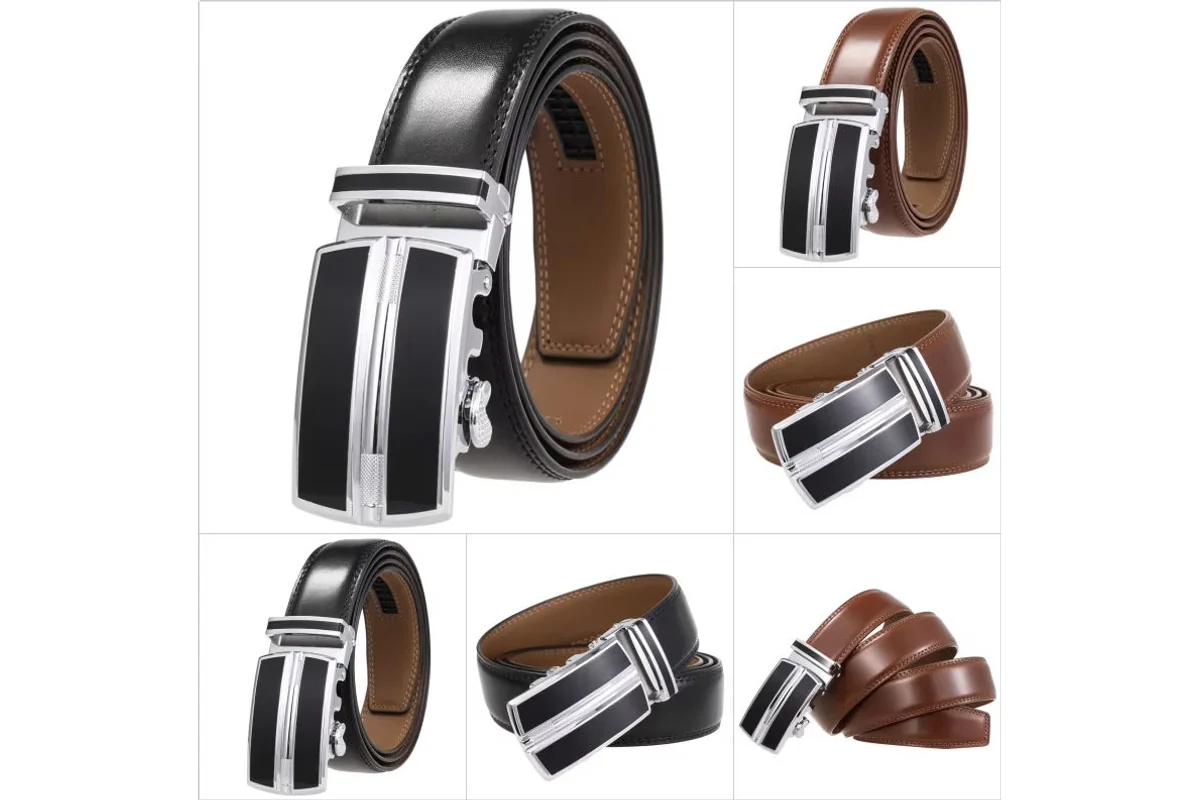
Try the lock and release
On the sample, listen and feel for engagement across the intended range, then release the belt while it is being worn.
Discuss the Sample Mechanism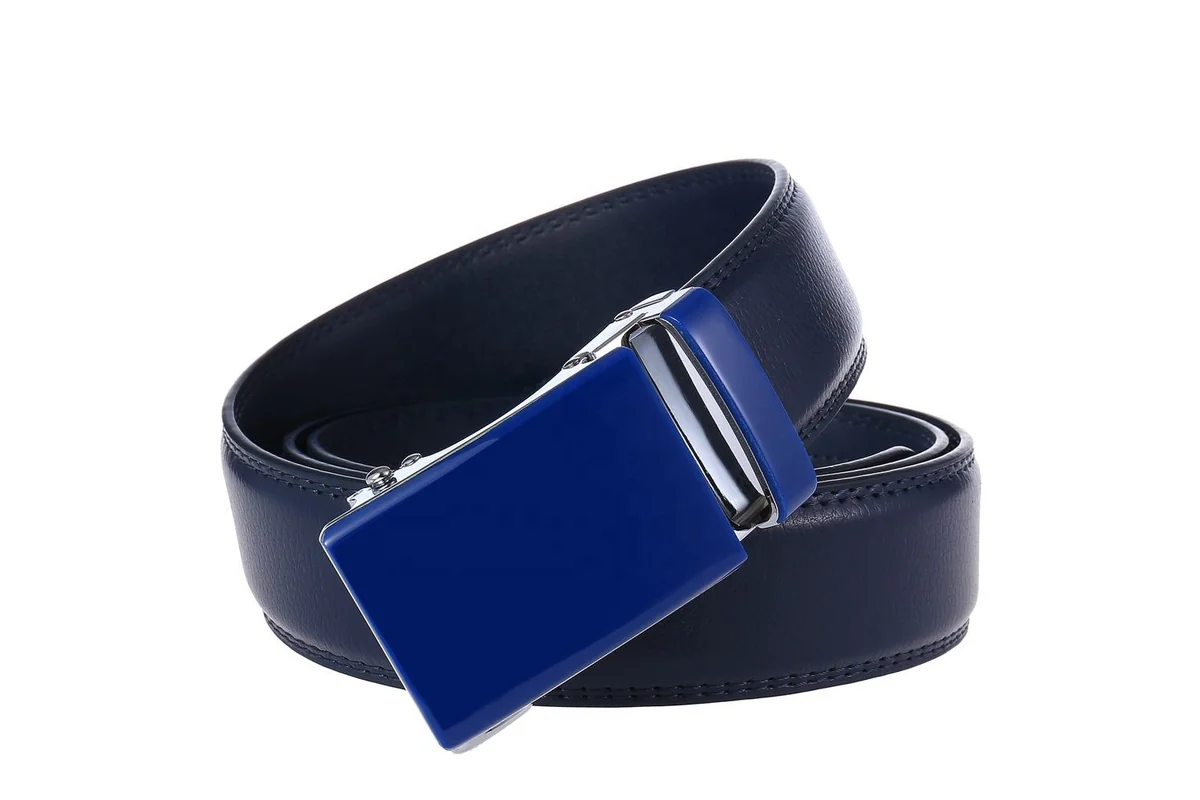
Check the Action on the Sample
Fasten the sample at the beginning, middle and end of the intended range. Check that the strap advances smoothly and that the release can be operated while worn.
Price Your Ratchet Belt
Send a photo of the buckle you like or describe the style. If you want to match an existing mechanism, a photo of the track is helpful.
Get a Custom QuoteRatchet Belt Buying Questions
Details that affect the mechanism, fit and order.