
Custom Leather Belts
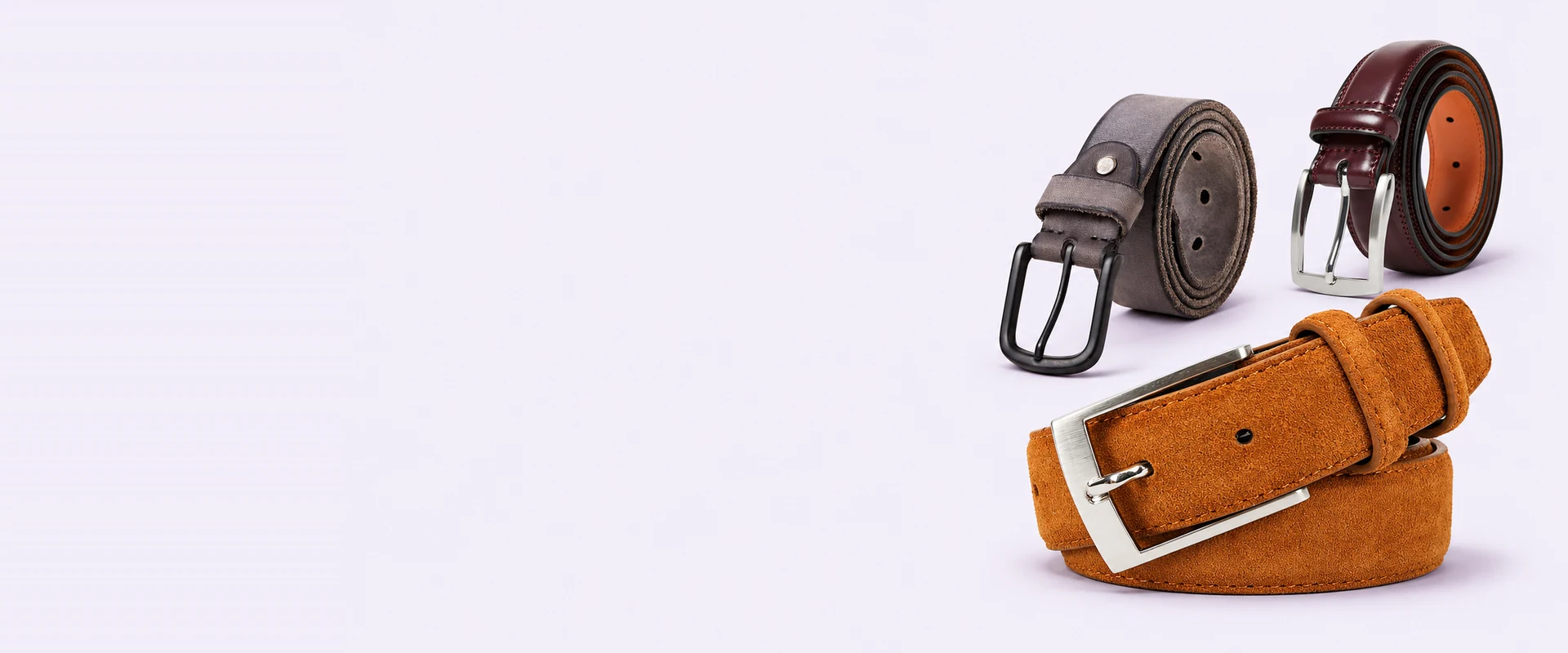
Our Yiwu factory makes smooth dress belts for tailoring and wider, contrast-stitched styles for denim.
Build a Leather Belt Around the Outfit
- Orders start at 100 belts.
- The strap width, hole positions and tip length determine how the belt sits in trouser loops.
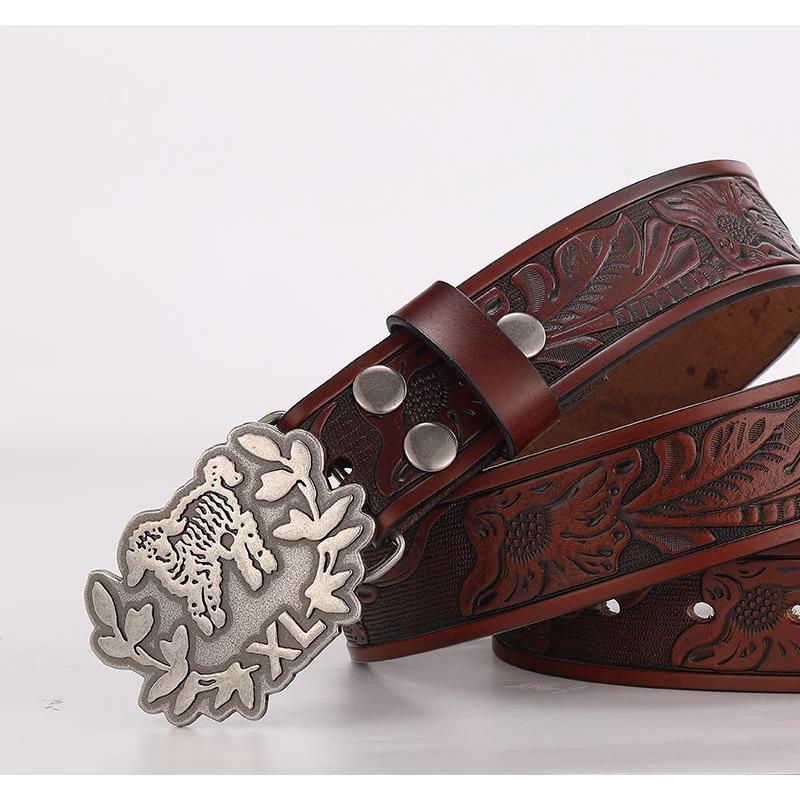
- A stamped mark and a contrast stitch draw the eye to different parts of the strap.
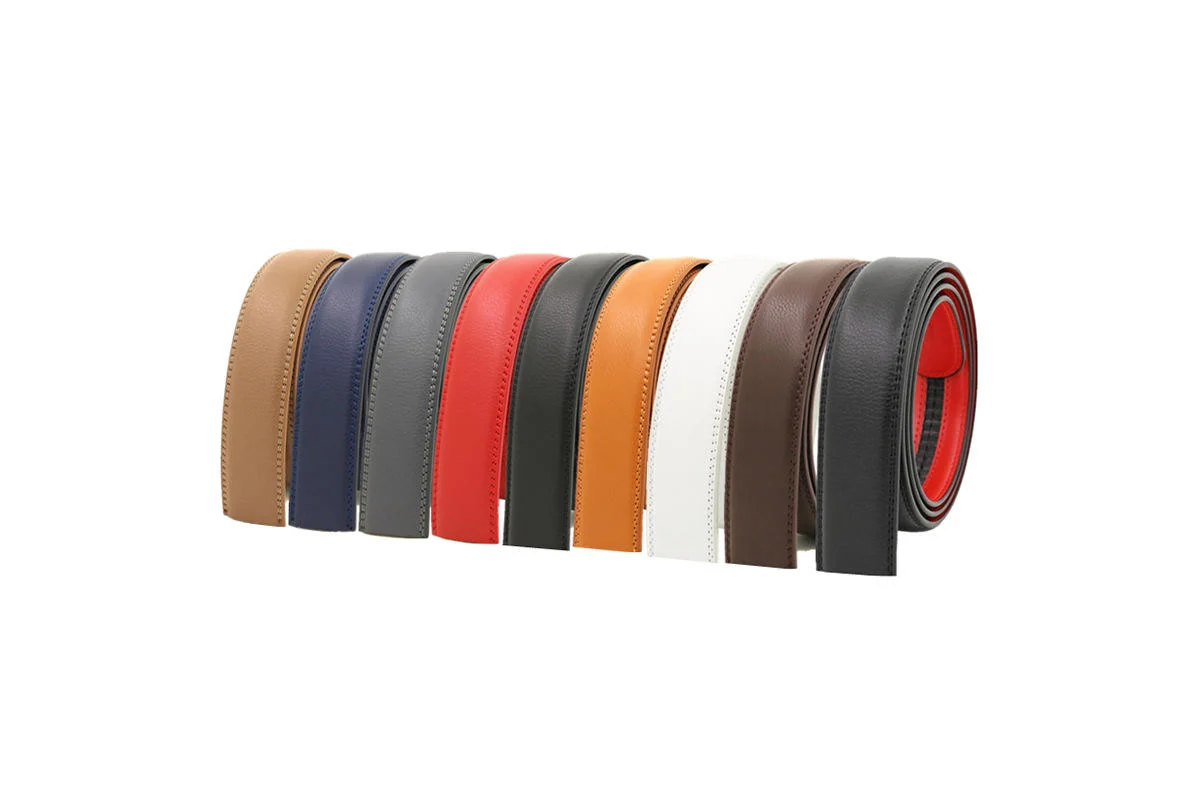
- Leather grain, surface finish and lining all affect how the belt looks at the edge.
- We make the belts in our Yiwu factory and check every belt before it ships.
Developing Leather Belts with WiseBelts
Work with our Yiwu belt factory from the first reference to a physical sample and a production order.

A belt maker in Yiwu
You discuss the leather belt directly with the factory in Zhejiang, China.

A starting point for a first run
Our minimum is 100 belts, giving you a quantity to use when costing a new style.
A sample to handle
Sample making takes 3–5 days. Handle the strap and look at the grain under the lighting used in your store.
Matching the outfit
A photo of the shoes, jeans or suit helps us match the belt to your line.

Bulk production
Our production time is 15–25 days, separate from transport to your destination.
Inspection before dispatch
We check every finished belt before shipment. You can use the sample to review how the grain and edge look together.
Dress, Denim and Everyday Leather Belts
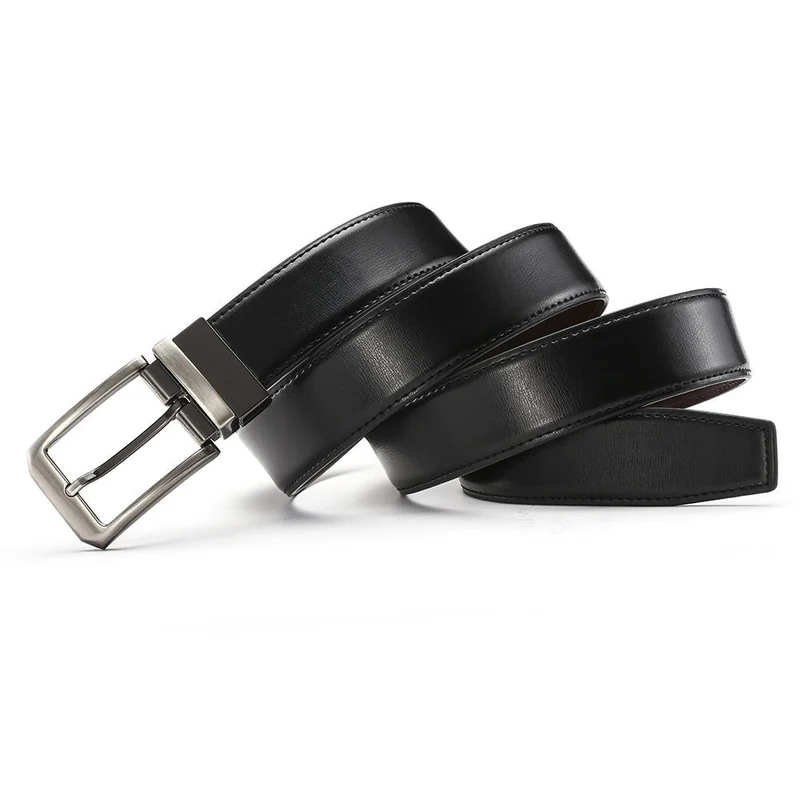
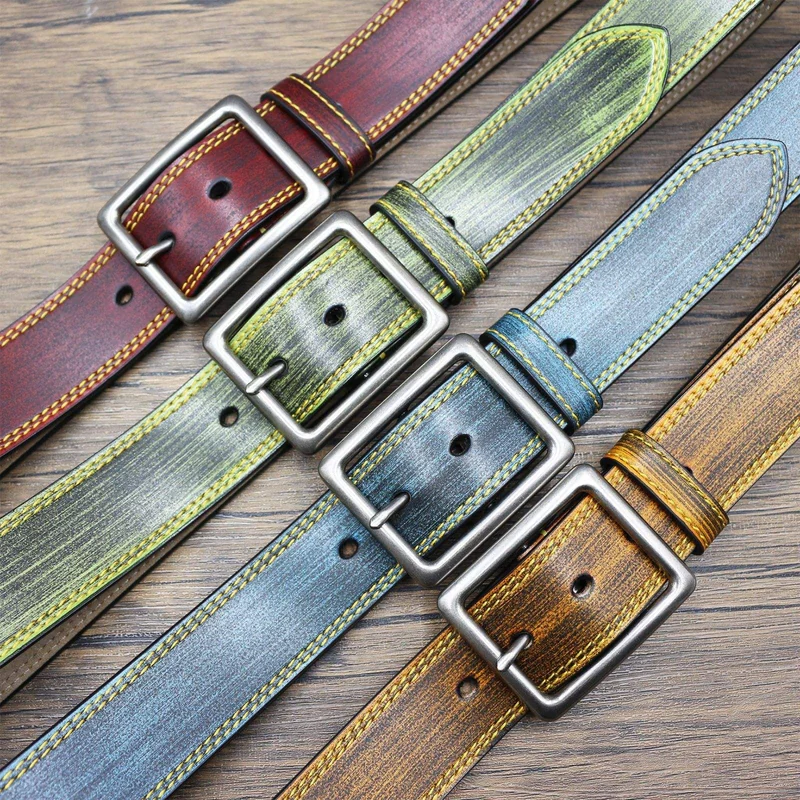
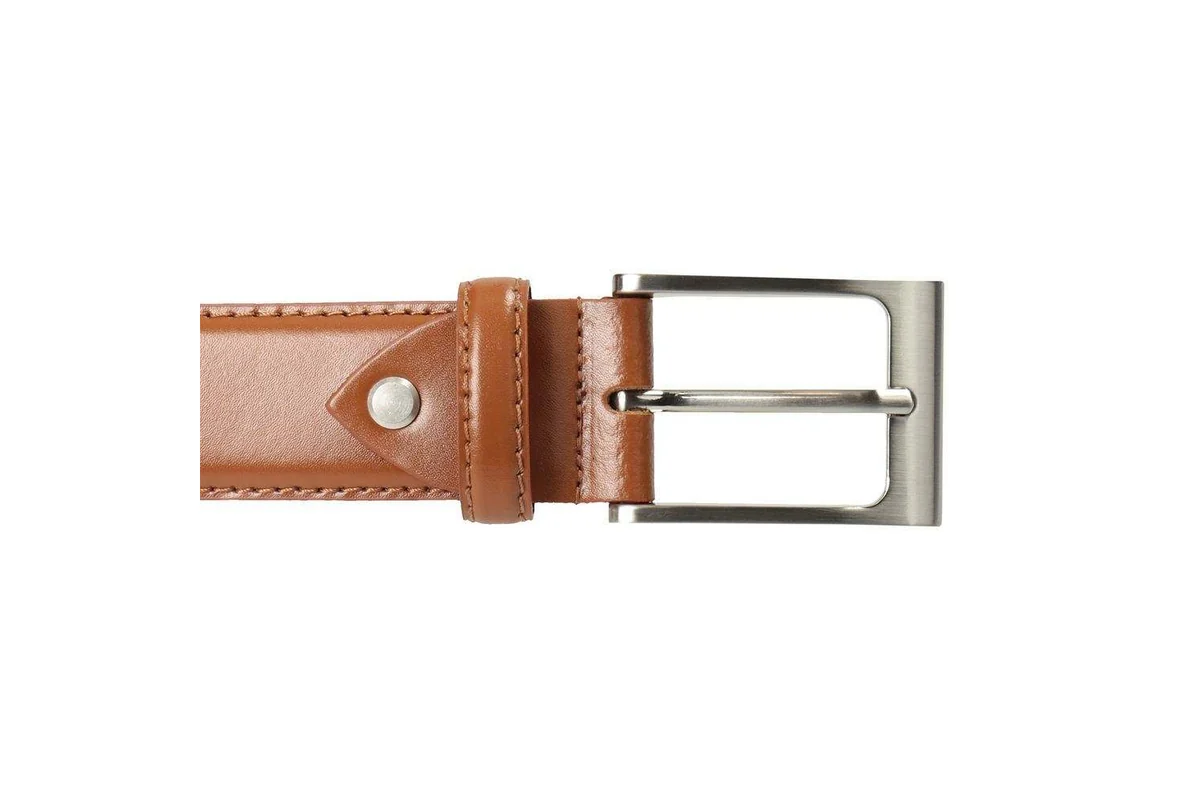
A slim buckle and tonal stitching suit a smooth dress belt. On a wider jeans belt, two rows of contrast stitching outline the strap.
Choose the Grain and Surface
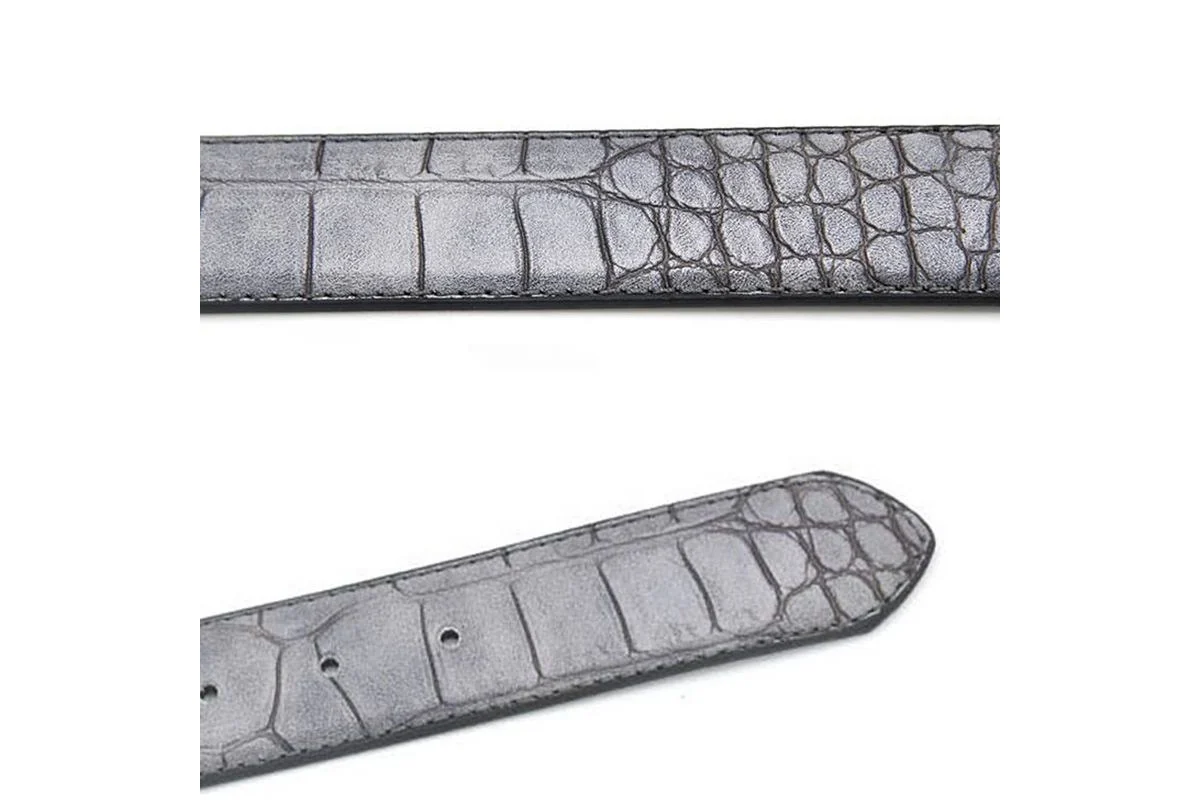
Start with how the face of the belt should catch the light. Grain, material type and finish describe different things.
- Visible natural grain
An open grain pattern gives a plain strap character without a printed motif. - Smooth face
A quieter surface leaves the buckle as the main detail on a dress belt. - Suede texture
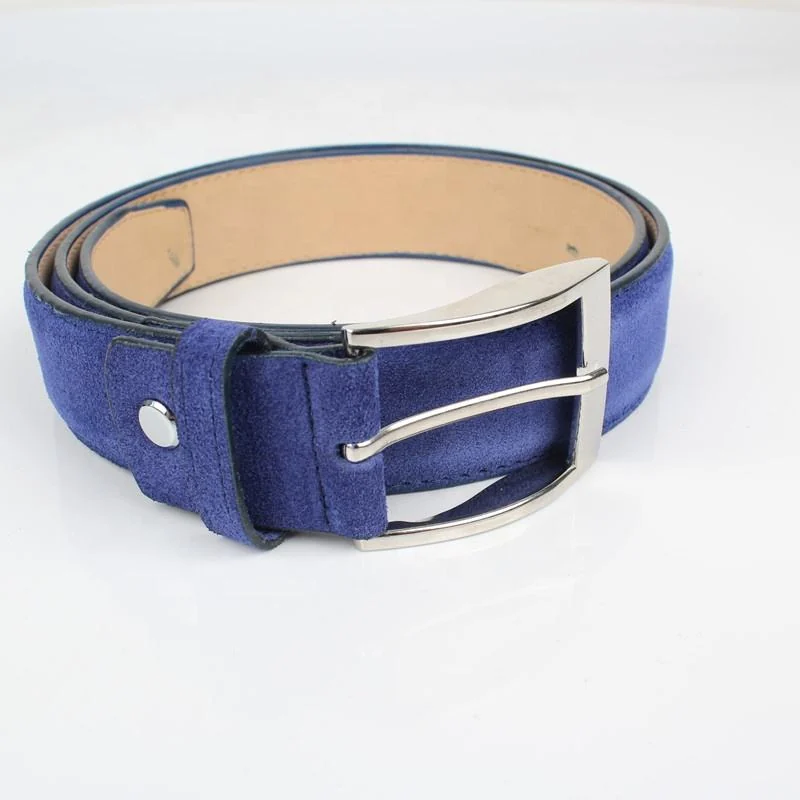
The nap changes shade when brushed in opposite directions, a useful detail when matching footwear. - Material description
Cowhide names the animal source. Full-grain leather keeps the original grain surface. Split leather comes from a lower layer of the hide.
Fit the Strap to the Trousers
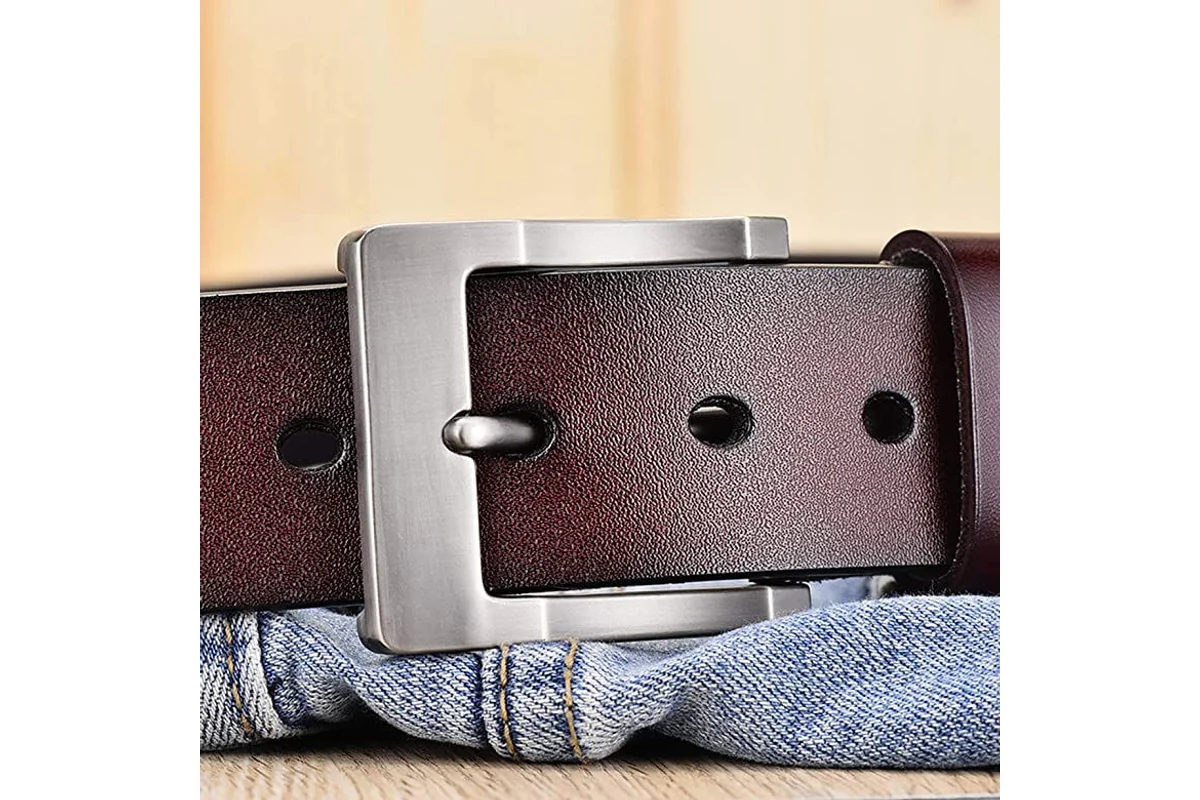
For a pin-buckle belt, measure from where the pin meets the frame to the hole the wearer uses. The total length includes the tail beyond that hole.
- Belt width
Use a trouser loop as the reference. Allow enough clearance for the strap to move through it. - Middle-hole fit
For a pin buckle, specify the distance from the agreed buckle reference point to the center hole. - Adjustment holes
Round or oval holes take the buckle pin. The spacing between holes sets the size of each adjustment. - Tail length
The distance past the fastened hole determines whether the tip reaches the first trouser loop.
Finish the Edge
The edge shows the belt in profile. Its color can blend with the face or draw a fine line around it.
- Tonal edge paint
A color close to the face gives lined dress belts a continuous outline. - Contrasting edge
A darker edge outlines tan or light-colored leather and emphasizes the tip shape. - Burnished edge
On suitable leather, polishing the cut edge leaves the leather itself visible. - Folded edge
Turning the face material around the edge gives a rounded profile and changes the thickness at the sides.
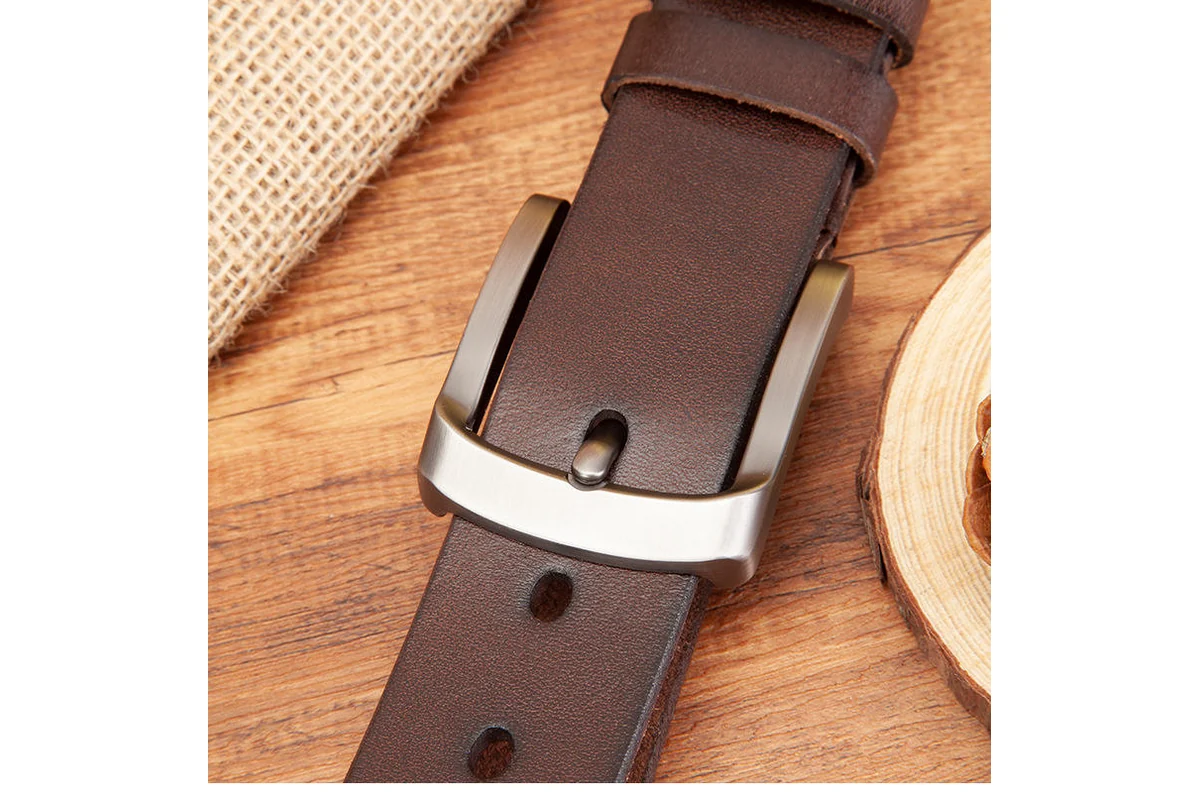
Pair the Buckle with the Strap
A double-prong buckle takes two parallel rows of holes. The frame opening must accommodate the finished strap width and thickness.
- Single-prong frame
A simple frame and one row of holes suit a clean dress-belt layout. - Roller detail
The roller turns as the strap passes over it, which can help guide a thicker strap through the frame. - Metal finish
Brushed metal diffuses reflections. A polished frame catches more light against dark leather. - Tip shape
A rounded or tapered tip changes the outline visible beyond the keeper.
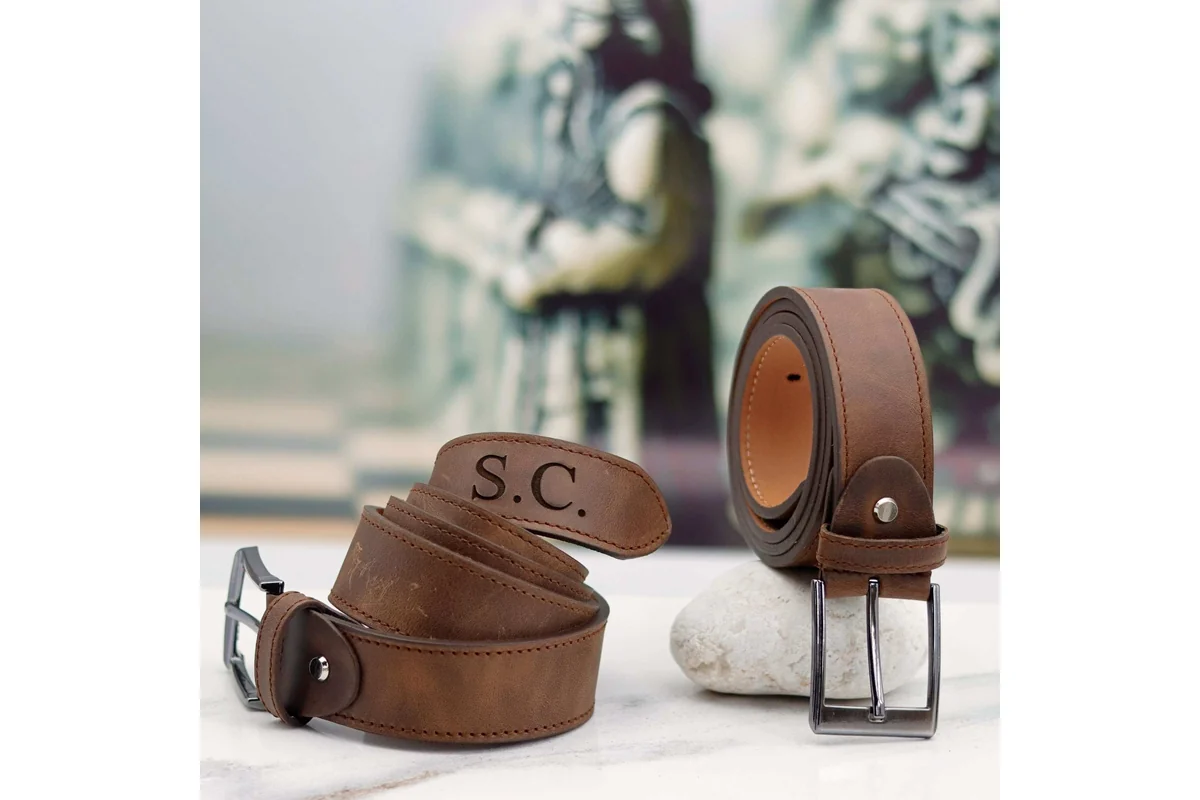
Place the Brand Mark
Think about what the wearer sees with the belt fastened and what the buyer sees when it is picked up in store.
- Debossed mark
A recessed mark lets the leather surface show through the letters. - Foil accent
A metallic detail stands out from the leather face; fine lettering needs enough space to read. - Branding near the tip
A small mark can stay visible outside the keeper, depending on the length of the tail. - Inside branding
An inside mark leaves the outer face clear for formal styling.
Read the Leather Specification
The face, back and cut edge together give a clearer picture of the strap than a single grain photograph.
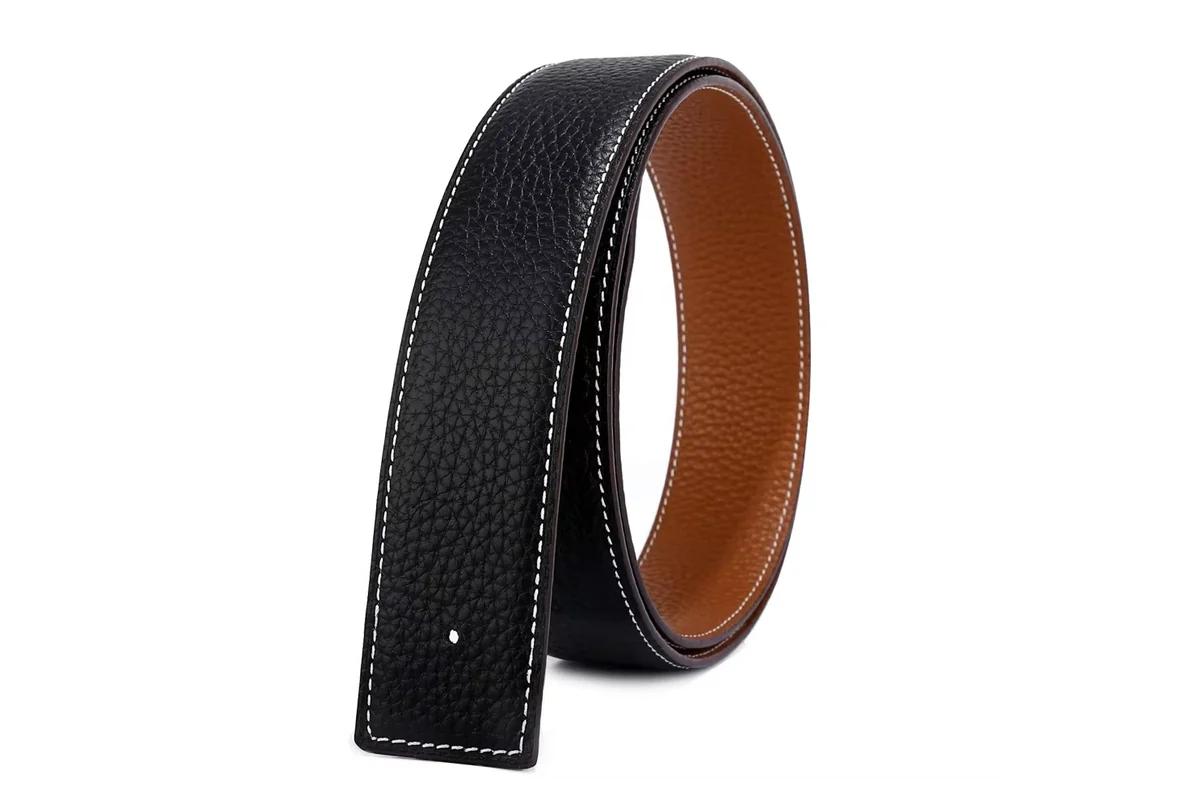
Leather Face and Lining
The face controls the grain you see. A lined strap may have a different material against the clothing.
Discuss Leather Construction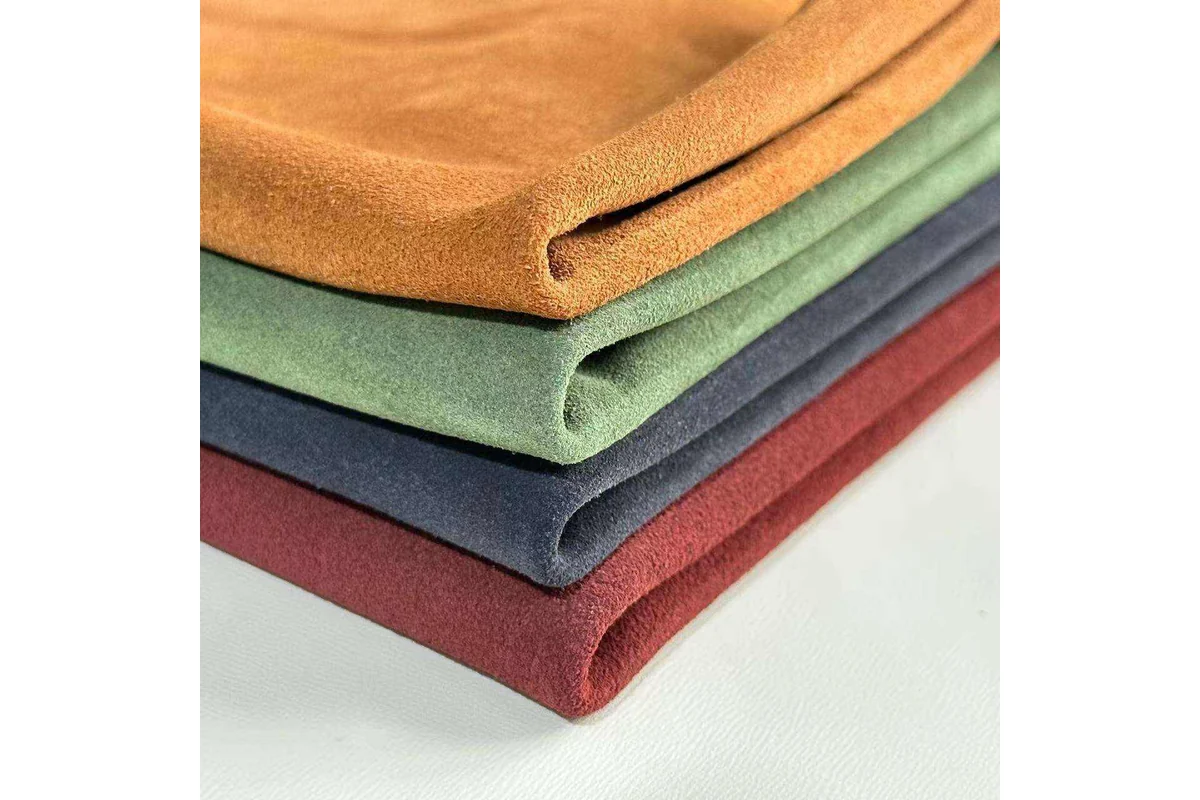
Smooth Leather or Suede
Smooth faces reflect light more evenly. Suede has a directional nap that gives casual belts a softer-looking surface.
Compare Surfaces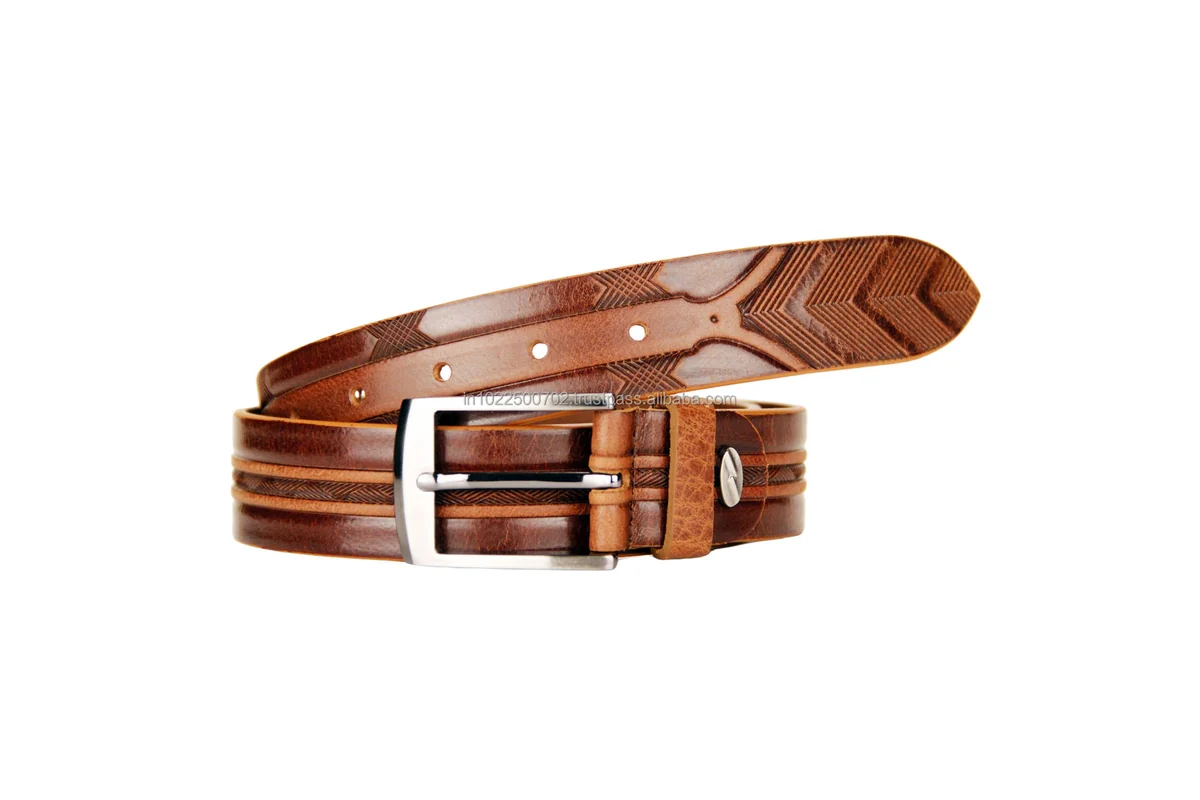
Review the Finished Belt
The sample lets you see the grain, stitching and edge on one finished belt. We check every belt at the factory before the order ships.
Discuss a Leather Sample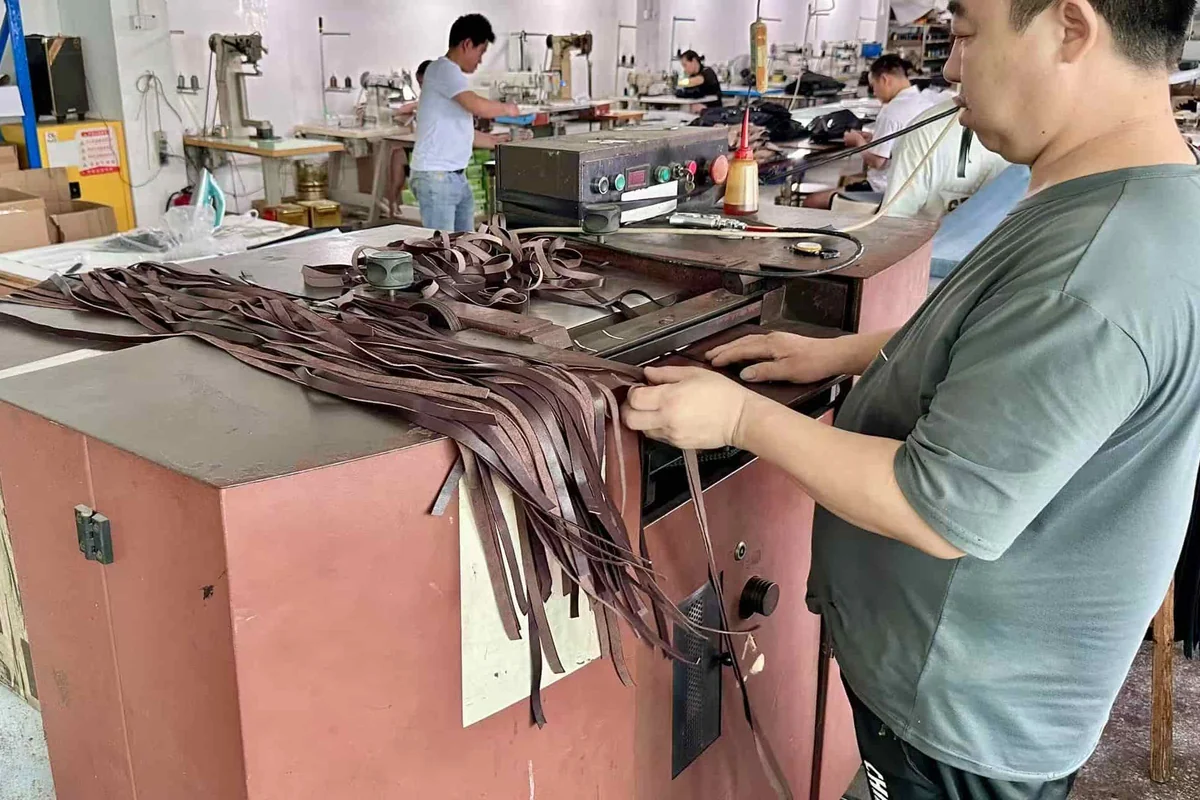
From Leather Sample to Production
The approved sample gives our factory a reference for the tip shape, edge finish and stitching on the bulk order. We check each finished belt before shipment.
Have a Leather Belt in Mind?
A photo of a belt, a pair of trousers or the shoes you want to match is enough to start. A short description works, too.
Get a Custom QuoteLeather Belt Order Questions
Plan the fit, sample and first production run.